Written together with AI. How, on the About
How to Tell an Article Was Written by AI, Without Running a Detector
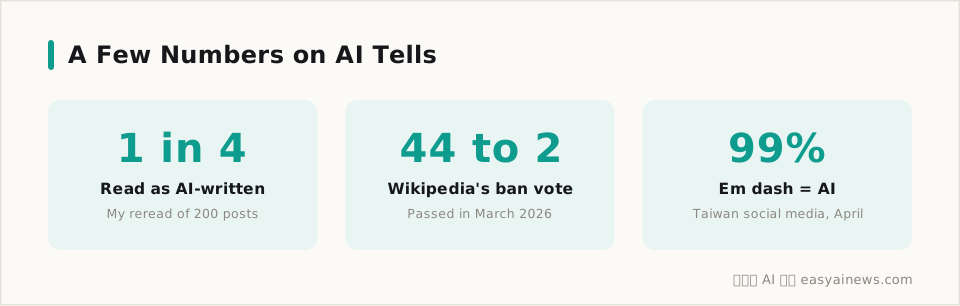
Wikipedia voted 44 to 2 in March 2026 to ban AI-generated content, and published a field guide to spotting AI prose. This pulls together its tells, what a language researcher found this year, and what I noticed rereading 200 posts I'd saved.
In this article
You can tell when an article was written by AI, and reading it yourself often works better than any detector. Wikipedia voted 44 to 2 in March 2026 to ban content generated or rewritten by large language models outright. The site then published its own field guide, a list of the tells its editors watch for by eye.
This isn't a piece about running detection software. Why those tools fall short is covered elsewhere. What follows pulls together what Wikipedia, one language researcher, and a few months of chatter on Taiwanese social media have each separately noticed: which sentence pattern gives AI away most, what word and punctuation habits leave a trace, and whether spotting one or two of them is ever enough to call it.
What Sentence Pattern Gives It Away Most?
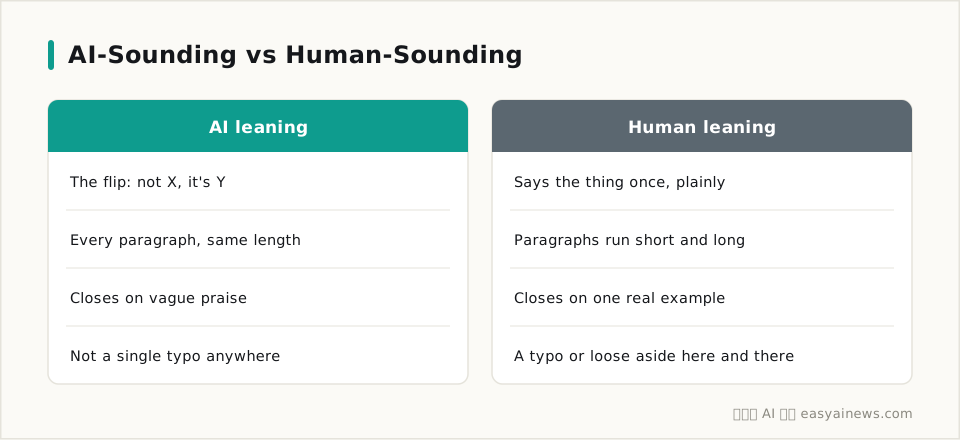
The single most reliable one is the flip, "it's not X, it's Y," stacked next to paragraphs that all run the same length and rhythm.
A while back, putting this newsletter together, I had someone reread roughly 200 posts I'd bookmarked over the past six months and score each one against a short list of tells. About a quarter read as AI-written or heavily AI-edited, and the pattern that turned up most often was exactly that flip. Three or more in one piece, and you can call it with confidence.
Wikipedia's guide names the same family under a few different labels, cataloging several twists on that same flip, plus "from X to Y," the kind that jams two unrelated things together to fake depth. A post that went viral on Taiwanese social media in April made the same point more bluntly, naming that flip as the single most obvious giveaway.
Sentence structure is one layer. Word choice and punctuation give away just as much, and get noticed far less.
What Do Word Choice and Punctuation Give Away?
The vocabulary leans formal and empty at once, and the punctuation runs heavier and more regular on one mark: the em dash.
Wikipedia's list flags a run of overused words, things like "testament" and "underscore" dropped in for weight they haven't earned, plus a habit of wrapping up every paragraph with its own little takeaway line. The formatting leaves marks too. Title Case headers where none belong, bold text used past any reasonable rate, stray Markdown symbols in what's supposed to be plain prose, even an emoji showing up somewhere too formal for it.
On punctuation, a thread that circulated on Taiwanese social media in April crowdsourced a rule of thumb: spot an em dash, and it's AI ninety-nine times out of a hundred. The same thread named a handful of pet phrases, words that keep surfacing in one piece like they were pulled from a shared script.
That's a long list of tells. The real question is whether spotting one or two of them is enough to call it.
Is Spotting One or Two Tells Enough to Call It?
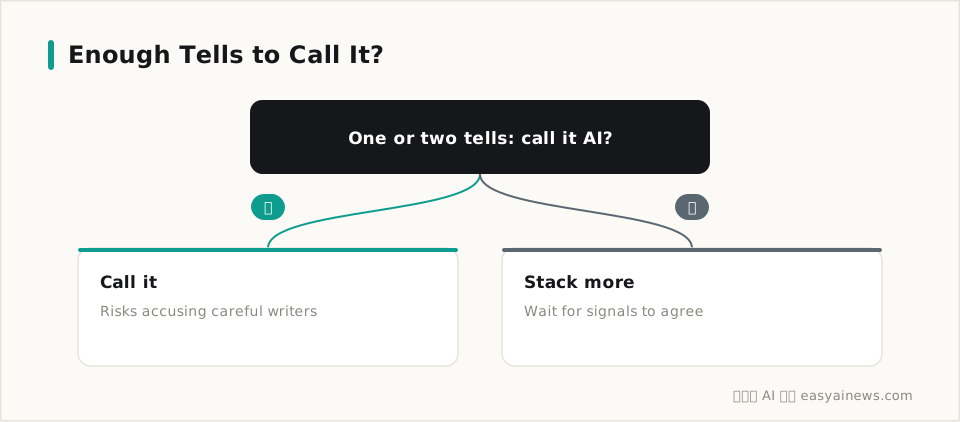
No, and treating it that way will get you a false accusation fast, especially against non-native speakers or anyone who happens to write with care.
Celeste Rodriguez Louro, who runs the language lab at the University of Western Australia, published research this August that says it plainly. You can train yourself to notice more over time, but every tell you learn has an expiration date, since the moment a model gets updated, whatever caught your eye last month might be gone. No single feature, she notes, reliably identifies AI text on its own.
It's the same trap detection tools fall into when they flag non-native English writers at more than ten times the rate of native speakers. Careful, formal sentences are often just what someone sounds like when they're choosing every word on purpose, not proof they ran it through a machine. If someone you know writes with unusual care, that's not a reason to accuse them of anything.
So the tells are real, but any one of them can mislead you. What does that leave you to actually do with them?
So What Do I Actually Do With All This?
I stack the evidence. One tell alone doesn't decide anything for me. Sentence pattern, vocabulary, and punctuation all pointing the same way, that's when I actually start to wonder.
I used the exact same method when I caught my own AI drafts for this newsletter repeating themselves: not judging one sentence in isolation, but lining up a dozen pieces and watching how densely the same pattern showed up across them. One good rhetorical flip might just be someone's one good idea that day. The same structure, the same kind of wrap-up, three or four times running, that's when it actually reads like a machine.
Scrolling through my phone, if something reads a little too clean, wraps every paragraph in its own tidy little conclusion, and drops an em dash every few lines, that combination is what makes me pause before sharing it further. Any one of those alone, I usually just find interesting and leave it there.
Three Things Worth Remembering
- The single most reliable signal is that flip described above, repeated. Three or more in one piece and you can call it with confidence.
- Formal, empty vocabulary, a heavy and regular hand with em dashes, and a little wrap-up line closing every paragraph are all mechanical tells.
- Spotting one or two isn't enough to call it. Even the researcher who studies this says there's no formula, and non-native speakers or careful writers are the easiest people to accuse wrongly.
- If you're actually trying to decide, wait until two or three different kinds of tells line up. One on its own is worth noticing, not accusing anyone over.
Next time you read something that feels a little too polished, every paragraph landing its own clean little conclusion, don't rush to hit share. Spend ten seconds counting how many tells actually stack up. That beats jumping to a verdict almost every time.